Excessive Hair Shedding in Multan: Causes, Signs & When to Seek Help
Seeing more hair on your pillow, in the shower or on your hairbrush? Increased shedding can feel alarming, but it does not always mean permanent hair loss.
Illness, childbirth, rapid weight loss, nutritional problems and other health changes may trigger it. At Skinology, we focus on finding the reason before recommending treatment.
Hair naturally grows, rests and sheds. Losing around 50–100 scalp hairs daily is a commonly cited range, although washing and grooming routines affect what you notice.
A common cause of increased, widespread shedding is telogen effluvium. A health-related trigger shifts more follicles into their resting phase, and extra hair may start falling about two to three months later. Many cases improve after the trigger resolves, but visible fullness can take months to return.
Khanewal, Vehari, Layyah , Shujahbad & DG.Khan
Recognising the Signs
Early Signs of Excessive Hair Shedding
These changes may appear before you notice a major difference in overall density.
01 · MORE FALLING HAIR
More Hair Falling Out
You notice more strands in the shower, on your pillow or while brushing.
02 · LESS VOLUME
Reduced Hair Fullness
Your ponytail feels smaller, or your hair looks less full than before.
03 · DIFFUSE THINNING
Thinning Across the Scalp
You see a general drop in density rather than one clearly defined bald patch.
04 · DELAYED ONSET
Shedding After a Health Change
Hair fall starts weeks or months after illness, childbirth or another possible trigger.
Possible Causes
Why Am I Shedding So Much Hair?
✓
Telogen Effluvium
May follow fever, infection, surgery, childbirth, major stress, rapid weight loss or medication changes. Shedding often starts later.
✓
Iron or Nutrition Problems
Iron deficiency or too little protein and energy may contribute. Supplements should address a demonstrated need.
✓
Thyroid Disorders
Both underactive and overactive thyroid conditions can contribute to diffuse hair loss.
✓
Postpartum Changes
Hormonal changes after delivery commonly cause temporary shedding. Persistent loss may need further assessment.
✓
Rapid Weight Loss
Severe calorie restriction, inadequate nutrition or substantial weight reduction can disrupt the hair cycle.
✓
Medicines & Scalp Conditions
Some medicines and inflammatory scalp disorders may contribute. Never stop prescribed treatment without medical advice.
Pattern hair loss can coexist with shedding. Sudden hair fall may reveal gradual thinning that was already developing.
The Hair Cycle
Understanding the Hair Shedding Cycle
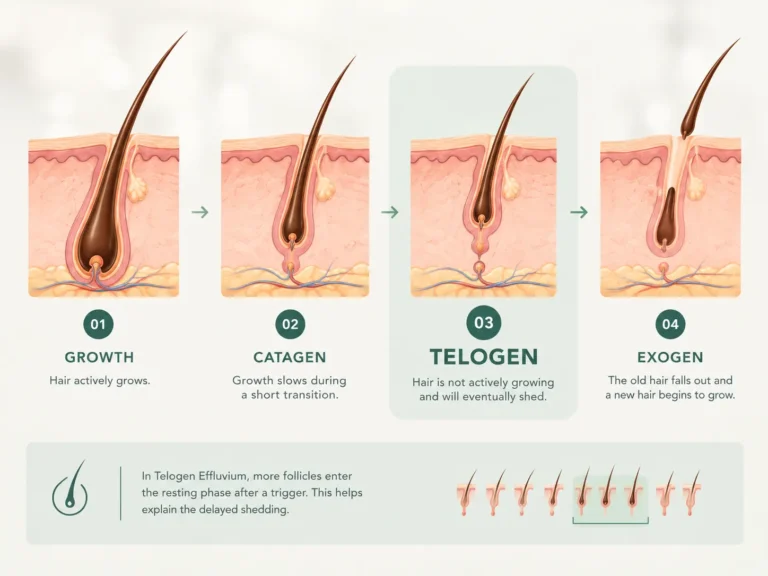
01 · ANAGEN
Hair actively grows in this cycle.
02 · CATAGEN
Growth slows during a short transition.
03 · Telogen
The follicle rests while the hair remains in place.
04 · Exogen
The hair is released as part of the cycle.
In telogen effluvium, more follicles enter the resting phase after a trigger. This helps explain the delayed shedding.
Diagnosis
How Is Excessive Hair Shedding Diagnosed?
A hair and scalp assessment comes before any recommendation for injections or surgery.
Hair & Medical History
When shedding started, recent illness, childbirth, diet, weight, medicines and family history.
Scalp Examination
Checks the distribution of thinning and signs of inflammation, breakage or scarring.
Hair Pull Test
May help assess active shedding. Washing frequency and technique can affect the result.
Trichoscopy
A closer look at the hair and scalp to help distinguish shedding from other conditions.
Selected Blood Tests
CBC, ferritin or thyroid studies may be useful when your history suggests a need.
Progress Photos
Baseline photographs can help track hair density and recovery over time.
When to seek help: Arrange an assessment for severe, persistent or recurrent shedding or visible thinning. Seek prompt evaluation for patchy loss, scalp pain, marked redness, scaling or possible scarring.
Treatment Options
How Can You Reduce Excessive Hair Shedding?
Treatment should match the diagnosis. There’s no reliable instant fix for every cause, and many people don’t need a procedure.
Identify & Address the Trigger
Treat relevant medical problems, correct confirmed deficiencies, improve inadequate nutrition, review medicines with the prescriber and manage scalp inflammation.
Support Hair & Scalp Health
Eat enough protein, handle hair gently, avoid tight hairstyles and address scalp irritation. Normal washing doesn’t cause telogen effluvium.
Medical Hair Treatment
Minoxidil may be considered if pattern hair loss also exists, but it isn’t routinely needed for isolated telogen effluvium.
Skinology’s dermatologist-led approach focuses on distinguishing temporary shedding from progressive hair loss, checking relevant medical and nutritional contributors, choosing investigations selectively and monitoring recovery. PRP or transplantation shouldn’t be automatic recommendations for uncomplicated shedding.
Around 50–100 hairs daily is commonly cited, but individual variation and wash frequency affect what you notice.
Why am I suddenly losing so much hair?
Telogen effluvium may follow illness, childbirth, rapid weight loss, major stress or a medication change, often with a delay of two to three months.
How can I stop hair shedding immediately?
There’s no proven instant fix for every cause. Identifying and addressing the trigger is the most useful first step.
Can men experience excessive shedding?
Yes. Men can develop telogen effluvium, and it can coexist with male pattern hair loss.
Do I need minoxidil or a transplant?
Not automatically. Minoxidil may suit coexisting pattern hair loss. Transplantation is generally not indicated for active uncomplicated telogen effluvium.
When should I see a dermatologist?
Consult a dermatologist at Skinology in Multan for severe, persistent, or recurrent hair shedding; visible thinning; patchy hair loss; scalp pain; significant redness or scaling; or signs of possible scarring.