
Home / Conditions / Hair Loss / Female

Female Pattern Hair Loss: Signs, Causes & Treatment in Multan

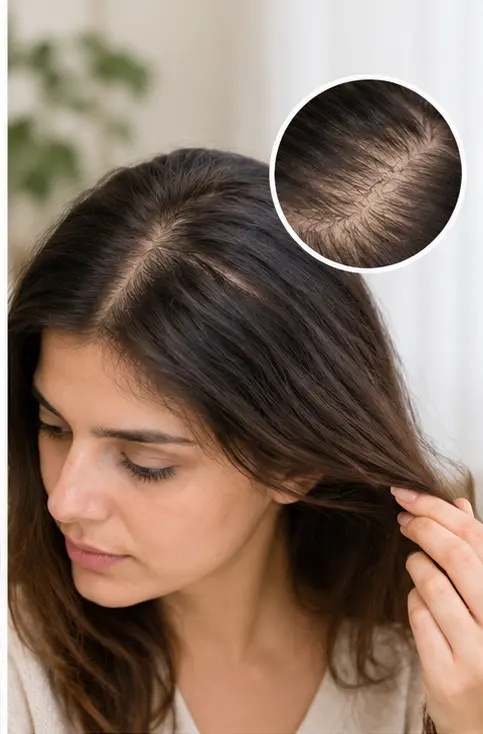
Female pattern hair loss is a common cause of gradual hair thinning in women. Your middle part may widen, your ponytail may feel smaller, or more scalp may show at the crown. It can start in your 20s and become more noticeable with age.

At Skinology Laser & Aesthetics, Multan, we check what’s causing the change before discussing suitable care. You don’t automatically need PRP or a hair transplant.

What It Is

What Is Female Pattern Hair Loss?

Some follicles, the tiny pockets in your scalp where hair grows, gradually make finer, shorter strands. Doctors call this follicular miniaturization. Over time, hair on the top and middle of your head may look less full. The front hairline often stays relatively unchanged.

Doctors also call this condition female androgenetic alopecia. It often develops slowly rather than causing sudden bald patches.

Khanewal, Vehari, Layyah , Shujahbad & DG.Khan

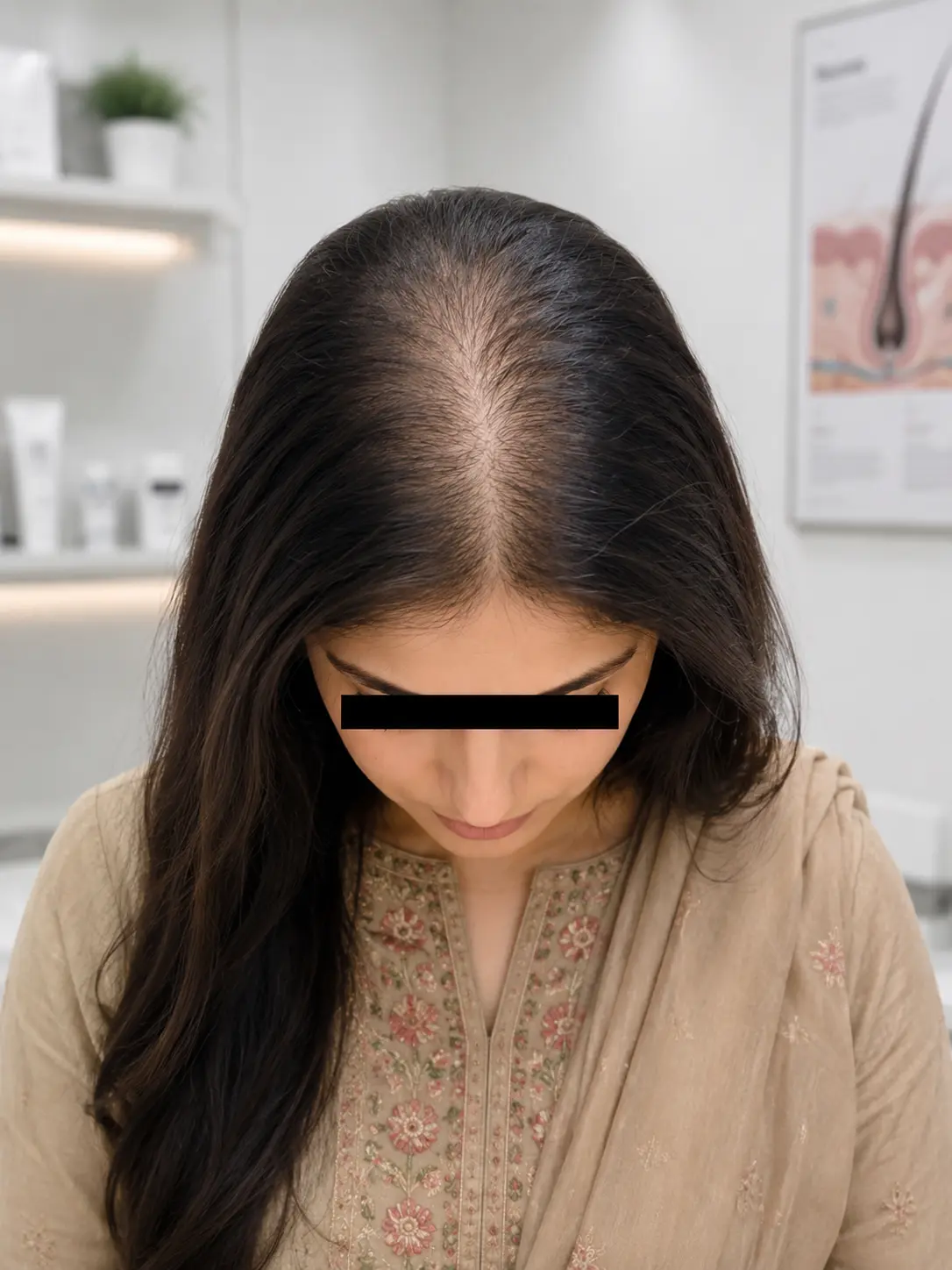
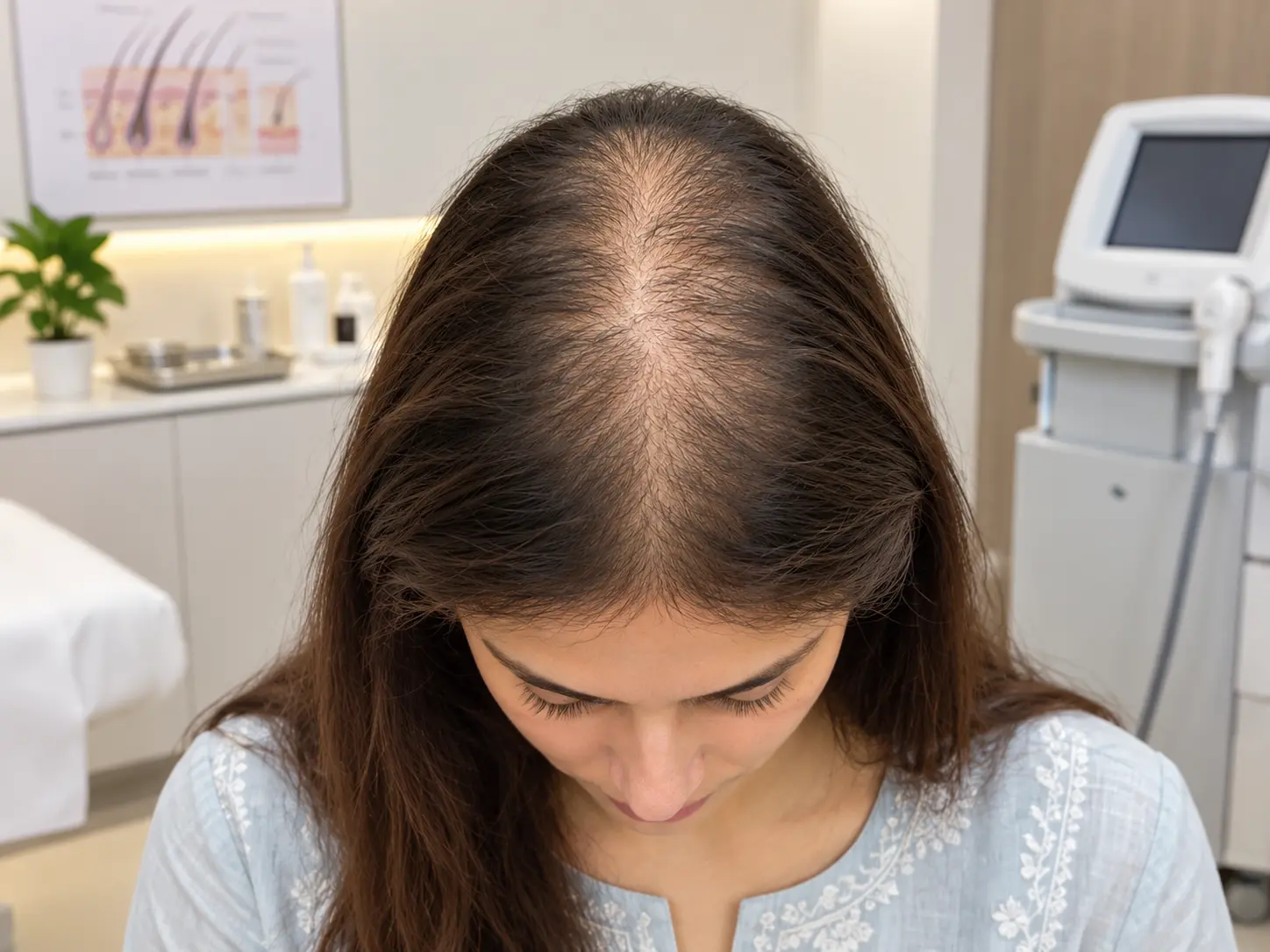
female pattern hair loss at Skinology

Early Signs

What Changes Might You Notice?

✓

Wider Middle Part

More scalp shows between your strands, especially under bright light.

✓

Thinner Crown

Hair on top of your head looks less full in overhead photographs.


✓

Smaller Ponytail

Your usual ponytail feels thinner, although breakage or shedding can also cause this.

✓

Finer, Shorter Hairs

Some hairs become smaller than the surrounding strands.

✓

More Shedding

Some women shed more hair, but shedding alone doesn’t confirm the condition.

✓

Hairline Changes

Marked frontal recession needs assessment for other causes, including traction conditions.

What Is Female Pattern Hair Loss?

Thinning usually affects the top and central scalp more. Widespread loss, including the back, deserves a closer check.

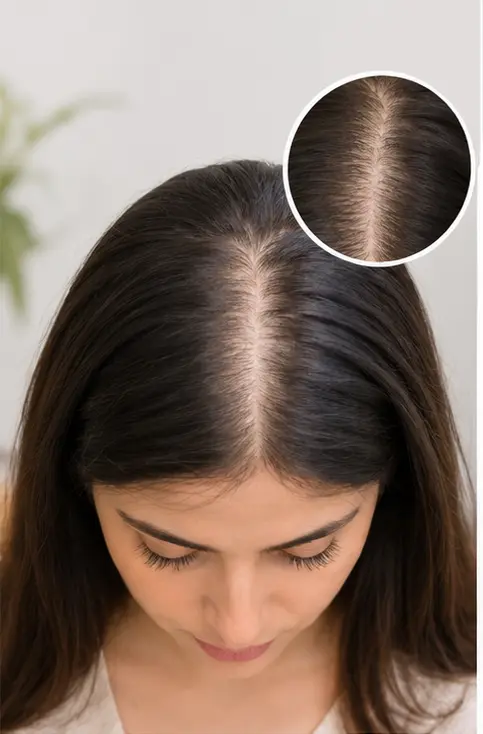
Widening Part

Stage I

Widening Part

Your usual hair part may start looking wider, with more scalp visible between the strands.

Stage II

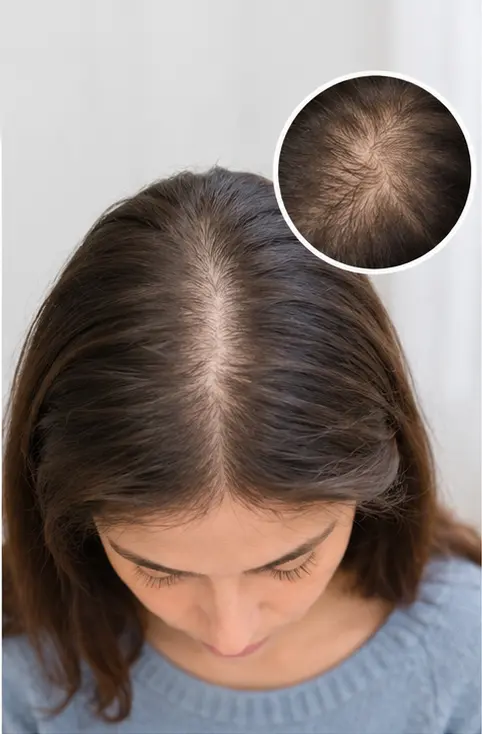
Crown Thinning

The hair on the top of your head may look less full, especially around the crown.

Reduced Hair Density

Stage III

Reduced Hair Density

Your hair may feel thinner overall, with less volume across the top and middle of your scalp.

Possible Causes

Why Is Your Hair Getting Thinner?

Your genes, age and hormone-related pathways can influence hair growth. You can have this type of thinning even when your androgen levels are normal.

01

Family History

A tendency towards thinning can come from either side of your family, even if no relative has obvious hair loss.

02

Hormones & Menopause

Hormone-related pathways affect follicles. Thinning becomes more common with age and after menopause.

03

PCOS

Some women with polycystic ovary syndrome also have acne, irregular periods or increased facial hair. PCOS doesn’t explain every case.

04

Other Contributing Factors

Iron deficiency, thyroid problems, inadequate nutrition, medicines and significant illness can add shedding or mimic the condition.

Can it start in your 20s? Yes. A widening part or gradual loss of volume at a younger age is worth checking, don’t assume it’s simply stress or genetics. Postpartum shedding is different, but it can reveal thinning that was already present.

Stages

How Far Has The Thinning Progressed?

The Ludwig scale describes three broad levels of thinning. A clinician may also use the Sinclair scale, which grades central-part widening from 1 to 5. These are guides, not treatment decisions on their own.

Your middle part starts to widen slightly, but most of your hair still looks full.

Your middle part becomes wider, with more scalp visible across the top of your head.

Your hair becomes much thinner across the upper scalp, leaving larger areas of visible skin.

Diagnosis

How Do We Find Out What's Causing It?

Your History

We ask about when thinning began, family history, recent illness, diet, medicines and relevant menstrual or reproductive symptoms.


Scalp Examination

We look at the thinning pattern, hairline, scalp health and signs of inflammation or scarring.


Trichoscopy

Magnified examination helps assess hair thickness differences and signs of miniaturization.


Tests and progress

When needed, your clinician may request a blood count, ferritin/iron, thyroid or targeted hormone tests. Standardized photos can help track change.

Treatment Options

Treating a Receding Hairline Crown Thinning or Baldness

We choose your treatment based on your age stage progression history preference and goals.

Medical Hair Care

Medical treatments like minoxidil may help maintain existing hair and improve density. Other prescription options may suit selected women after a dermatologist reviews their health and treatment needs.

Explore Medical Treatment →

PRP and PRGF use your own blood-derived components to support hair restoration. They may improve hair density in selected women, although results vary and repeat sessions may be needed.

Explore PRP Hair Restoration →

For women with stable hair loss and healthy donor hair, a transplant may help restore coverage in thinning areas. Suitability depends on your hair loss pattern and scalp assessment.

Explore Hair Transplant Options →

female pattern hair loss in Multan

Compare Options

Medical Treatment, PRP or a Transplant?

Question Medical Care PRP / PRGF Hair Transplant
Main role Maintain or improve existing hair Possible added density Move suitable donor follicles
Procedure Usually nonsurgical Injections Surgery
Early thinning Often considered Selected cases Usually not first choice
Diffuse loss Often considered May be considered May limit suitability
Ongoing care Usually needed Repeat sessions may be needed Native hair may need care
Results Vary by patient Evidence and protocols less standardized Depend on donor supply

Medical Care

Main role Maintain or improve existing hair
Procedure Usually nonsurgical
Early thinning Often considered
Diffuse loss Often considered
Ongoing care Usually needed
Results Vary by patient

PRP / PRGF

Main role Possible added density
Procedure Injections
Early thinning Selected cases
Diffuse loss May be considered
Ongoing care Repeat sessions may be needed
Results Evidence and protocols less standardized

Hair Transplant

Main role Move suitable donor follicles
Procedure Surgery
Early thinning Usually not first choice
Diffuse loss May limit suitability
Ongoing care Native hair may need care
Results Depend on donor supply

Book a Hair Loss Consultation at Skinology Multan

You notice a receding hairline. Your crown feels thinner. Your density drops. A consultation clarifies your diagnosis and your options.

FAQs

Answers to Women Most Common Questions

Need Personalized Advice?

Our specialists are ready to answer your questions and guide you.

Can female pattern hair loss be reversed?

It’s usually chronic. Treatment may help maintain or improve density, but complete reversal cannot be promised.


No. It’s a common clue, but other causes of shedding or thinning can look similar.

Yes. It can start during reproductive years, even before menopause.

No. PCOS can contribute in some women, but it isn’t the cause in everyone. Hormone levels may also be normal.

It may be considered for selected women after reviewing contraindications, monitoring needs and pregnancy precautions.


It depends on the diagnosis, any necessary investigations, medicines and selected procedures. Request a consultation-based quotation.

VISIT Skinology

Aziz Bhatti Road, Saddar Multan Cantt