
Recurring white or yellowish flakes, sometimes with greasy areas, itching and redness.
Home / Conditions / Hair Loss / Scalp
Dealing with an itchy scalp, persistent dandruff, redness, painful bumps, excess oil or unusual scaling? Scalp problems can cause temporary discomfort, shedding or, in some cases, lasting hair loss.
Not every itchy or flaky scalp is dandruff. At Skinology Laser & Aesthetics, dermatologist-led assessment focuses on finding the cause, managing inflammation or infection and protecting your follicles.
Understanding scalp health
Scalp conditions affect the skin, hair follicles or oil glands on your head. They can involve inflammation, infection, allergy or changes in the skin barrier. An itchy or flaky scalp does not automatically mean dandruff. Some problems cause discomfort alone; others lead to broken hairs, shedding or lasting follicle damage.
✓
Recurring white or yellowish flakes, sometimes with greasy areas, itching and redness.
✓
Well-defined inflamed patches with thicker scale, sometimes extending beyond the hairline.
✓
Dryness, itching or burning that may follow exposure to a dye, fragrance or other product.
✓
Tender or itchy bumps and pustules centred around hair follicles.
✓
Tinea capitis can cause scaling, broken hairs and patchy hair loss; it is contagious.
✓
Inflammatory conditions that can permanently damage follicles without timely care.
Find the cause
01
An inflammatory response associated with Malassezia yeast, oily skin areas and individual susceptibility; generally not contagious.
02
An immune-mediated condition that produces more defined plaques and scale.
03
Hair dye, bleaching agents, fragrance or preservatives can provoke irritation or allergic contact dermatitis.
04
Infection or another inflammatory process affecting the follicle, recurring cases may need testing.
05
A dermatophyte fungal infection, especially relevant when scaling occurs with broken hairs.
06
Excess oiliness alone does not establish disease. Some inflammatory scarring conditions require early specialist diagnosis.
Recognise the symptoms
A hair and scalp assessment comes before any recommendation for injections or surgery.
Persistent itch, tenderness, stinging or discomfort.
White, yellow, dry or thick silvery-looking scale.
Visible inflammation, plaques, oozing or crusts.
Pimples or pustules that recur or become tender.
Broken hairs, patchy loss, unusual shedding or thinning.
Smooth areas with fewer visible follicular openings, particularly with pain or burning.
Seek prompt medical advice for progressive hair loss with pain, burning or scarring. Rapidly spreading painful swelling, fever or extensive pus needs urgent assessment.
See The Differences
Pictures can help you recognise patterns, but similar-looking conditions need different treatment. These are image-placement notes for approved clinical photography or medically reviewed illustrations.
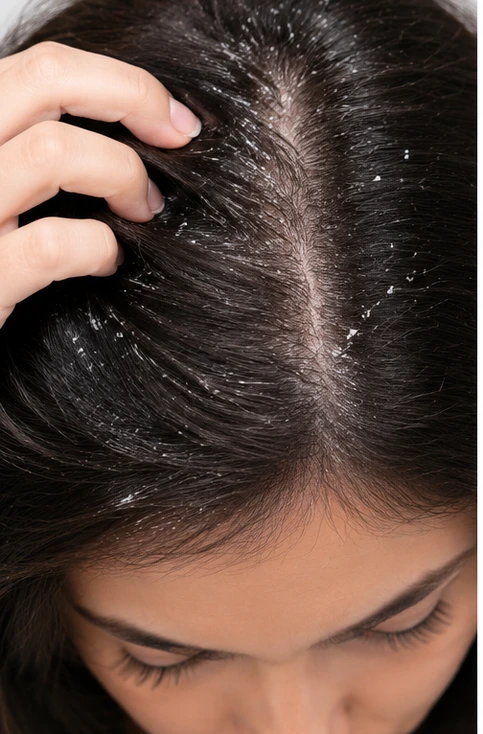
consented close-up showing flaky or greasy scalp scaling.
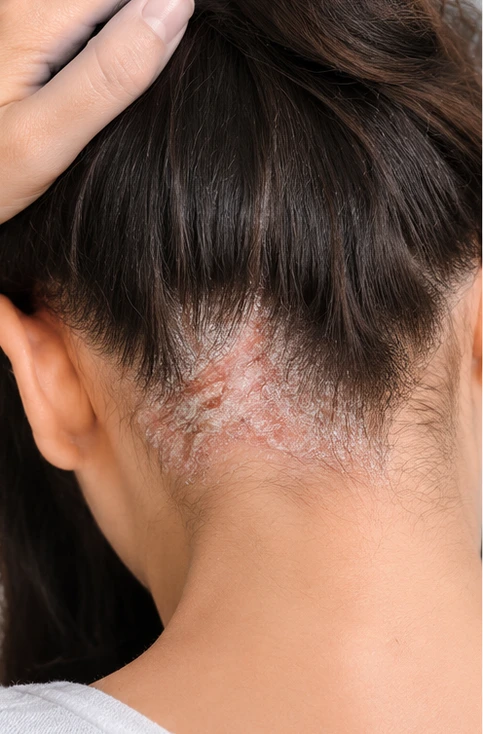
medically reviewed image of well-defined plaques and thicker scale.
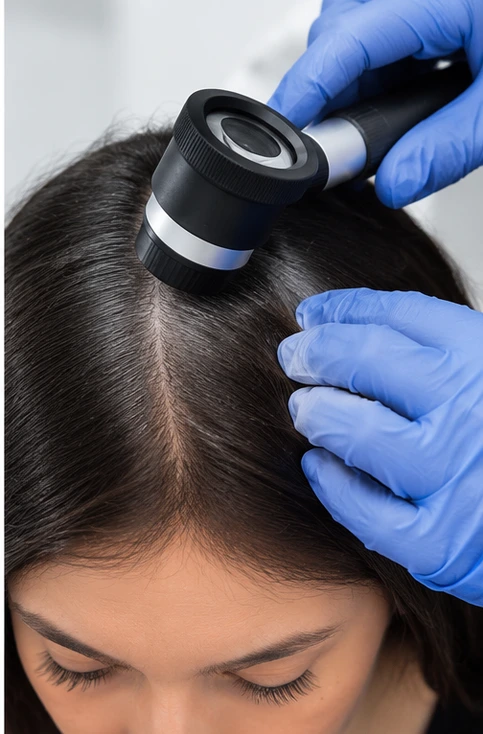
dermatologist examining scalp and follicles with magnification.
Clinical assessment
At Skinology, a dermatologist-led assessment starts with your symptoms, their duration, products you use, past treatment and any hair changes. The clinician checks the pattern of scaling, redness, bumps, broken hairs and follicular openings.
A close visual and magnified look at the scalp, hair shafts and follicular structures.
Fungal microscopy or culture when tinea is suspected; bacterial culture in selected recurrent or severe pustular cases.
Patch testing for suspected allergy; biopsy for uncertain diagnosis or possible scarring alopecia. Not everyone needs extensive blood tests.
Treatment approach
The right scalp treatment depends on the diagnosis. There is no single shampoo, injection or hair-restoration procedure that treats every scalp problem.
Depending on the diagnosis, a clinician may recommend ketoconazole, ciclopirox, selenium sulfide, salicylic acid or another suitable agent.
Selected cases of psoriasis, eczema and seborrheic dermatitis may need prescribed topical treatments. Avoid prolonged unsupervised steroid use.
Scalp ringworm generally needs oral antifungal medicine, shampoo alone isn’t enough.
Options may include topical steroids, vitamin D analogues or other specialist treatments according to severity.
Treat the identified cause, consider culture for recurrent pustules, and avoid confirmed irritating or allergenic products.
Prompt specialist-directed treatment aims to control inflammation and prevent further irreversible follicle loss.
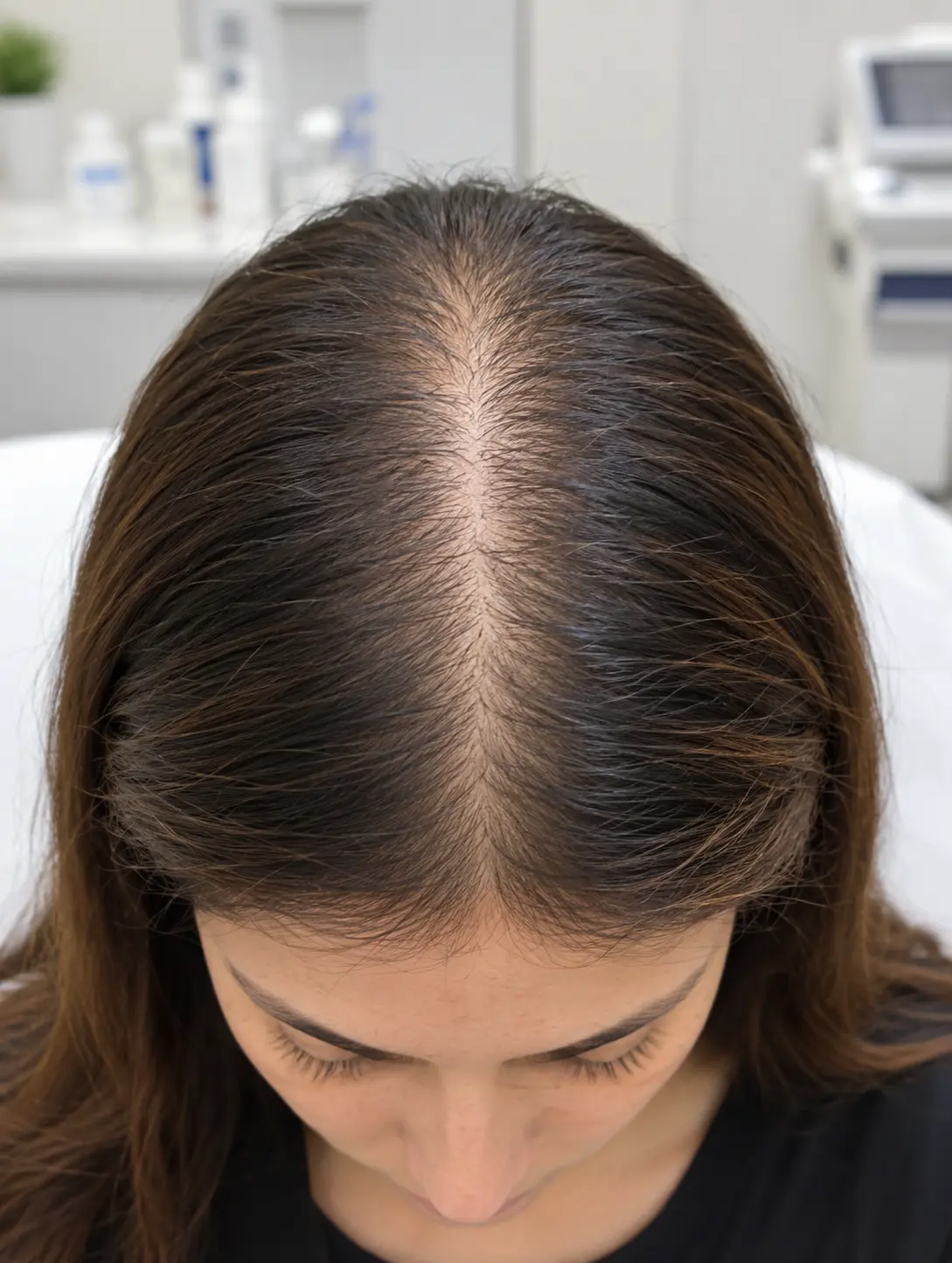
Gentle washing and avoiding harsh scratching or irritating products can support care. Oils and home remedies shouldn’t replace diagnosis-specific treatment. Explore medical hair treatment when a separate hair-loss diagnosis warrants it.
Scalp And Hair Health
Swipe left or right to view the full table →
| Condition | Possible Effect on Hair | Expected Recovery |
|---|---|---|
| Seborrheic Dermatitis | Inflammation may coexist with temporary shedding | Usually favourable with control |
| Scalp Psoriasis | Temporary shedding or breakage | Usually favourable if uncomplicated |
| Tinea Capitis | Broken hairs and patchy loss | Often favourable; severe kerion may scar |
| Folliculitis | Often limited; severe forms may scar | Depends on diagnosis |
| Contact Dermatitis | Shedding or breakage | Often improves after trigger removal |
| Scarring Alopecia | Permanent follicular destruction | Scarred follicles generally don't regrow |
Active infection or significant inflammation generally needs evaluation and control before elective hair restoration. PRP is not an established treatment for dandruff, psoriasis or active scalp infection.
Persistent dandruff, itching, redness, painful bumps or shedding? A dermatologist-led consultation can help identify the cause and appropriate care.
FAQs
Our specialists are ready to answer your questions and guide you.
Uncomplicated dandruff doesn’t usually permanently destroy follicles. Significant inflammation or another condition may contribute to shedding.
Possible causes include seborrheic dermatitis, psoriasis, eczema, contact dermatitis and infection. An examination can distinguish them.
Folliculitis, infection and other inflammatory conditions can cause tender follicle-centred bumps.
Folliculitis, infection and other inflammatory conditions can cause tender follicle-centred bumps.
Yes. Tinea capitis can cause broken hairs and patchy loss, particularly in children.
A dermatologist may recommend one when the diagnosis is uncertain or scarring alopecia is suspected.
Costs depend on your diagnosis, any tests, prescribed treatment and follow-up. Ask for Skinology for an individual estimate after assessment.
Arrange an assessment if itching or scaling persists despite basic care, painful bumps keep returning, a hair product seems to cause a reaction, or you notice patchy loss with broken hairs. Progressive thinning with burning or possible scarring deserves prompt review.
VISIT Skinology
Clinic
Treatments & Conditions
Contact Info
Address
Aziz Bhatti Rd, Saddar Multan Cantt, 64000
Phone
(+92) 312-4199100
Email
info@skinology.pk
Hours
Mon – Sat: 02:00 PM – 08:00 PM
Your trusted partner in achieving healthy, beautiful skin. Dr. Rizwana Hanif combines expertise with compassion to deliver exceptional dermatological care in Multan.
Copyright © 2026 Skinology Multan. All Rights Reserved.