
Hair Loss / Male

Male Pattern Hair Loss in Multan: Causes Signs and Treatment Options

You notice thinning at the temples. Your hairline moves back. A bald patch grows on your crown. These are early signs of male pattern hair loss. It is common and it can affect your confidence at any age. You do not need a transplant automatically. Some men respond to medical treatment. Others add PRP. Some need surgery. At Skinology Multan we start by identifying your condition and its stage.


How It Works

What Is Male Pattern Hair Loss?

Doctors call it androgenetic alopecia. It is a genetic condition. It thins your hair at the frontal hairline, temples and crown.

Your follicles react to DHT, a hormone made from testosterone. Over time they shrink. They grow thinner shorter hairs. This process is called follicular miniaturization. Unlike temporary shedding this condition progresses without treatment. The speed varies from person to person.

Early Signs

Early Signs of Male Pattern Hair Loss

✓

Your Hairline Recedes

You notice it first at the temples.

✓

Your Crown Thins

Density drops near the vertex.

✓

Your Scalp Shows Through

Especially in bright light.

✓

Your Hairs Get Finer

At the frontal hairline.

✓

Your Density Drops

Often with a family history behind it.

✓

Your Parting Gets Wider

The gap becomes more noticeable.

Causes

What Causes Male Pattern Hair Loss?

01

Genetic Predisposition

You can inherit this from either parent. Family history raises your risk but does not fix your exact onset or severity.


02

DHT Sensitivity

DHT shrinks follicles in genetically sensitive areas. You do not need high testosterone to have this condition.


03

Age & Follicle Changes

You can inherit this from either parent. Family history raises your risk but does not fix your exact onset or severity.


04

Other Causes of Shedding

Nutrient deficiency, thyroid disease, illness, medication and scalp inflammation can add shedding alongside this condition.

Stages

Hair Loss Stages: Norwood Classification

ILittle or no significant recession
IIMild temporal recession
IIIPronounced recession, sometimes early vertex thinning
IVFrontal and/or crown thinning with a separating hair band
VLarger affected areas and a narrower separating band
VIFrontal and crown bald areas largely merged
VIIExtensive loss, hair mainly at the sides and back

The Norwood stage shows your pattern. It does not decide your treatment on its own.

Diagnosis

How Is Male Pattern Hair Loss Diagnosed?

Medical History

Review of onset, progression, history and previous treatments.

Scalp Examination

Assessment of the hairline, crown, scalp health and donor area.

Trichoscopy

Magnified scalp analysis to identify hair miniaturisation and changes.

Hair Density Assessment

Photographs and measurements to evaluate overall hair thickness.

Treatment Options

Treating a Receding Hairline Crown Thinning or Baldness

We choose your treatment based on your age stage progression history preference and goals.

Medical Hair Loss Treatment

Topical minoxidil may improve hair density but requires consistent use and can cause irritation, shedding or unwanted hair growth. Finasteride may slow male pattern hair loss by reducing DHT in suitable adult men. We discuss potential sexual, mood and reproductive effects. Oral minoxidil or dutasteride may be considered under specialist supervision.

Medical hair loss treatment →

PRP and PRGF hair treatments use your own blood to support hair density in selected patients. Results vary, protocols differ, and they cannot reliably restore advanced baldness.

PRP hair restoration →

Hair transplant surgery moves healthy follicles from the donor area to thinning or bald areas. It requires proper diagnosis, donor assessment and realistic goals. Transplantation does not prevent future native hair loss.

Hair transplant options →

FUE hair transplantation extracts individual follicular units without a long linear incision. It leaves small extraction scars and requires careful donor-area planning for natural-looking results.

FUE hair transplant →

DHI and Sapphire FUE use different implantation or incision techniques. Suitability depends on your scalp, donor supply and surgical plan. Neither guarantees superior graft survival or hair density.

DHI hair transplant →

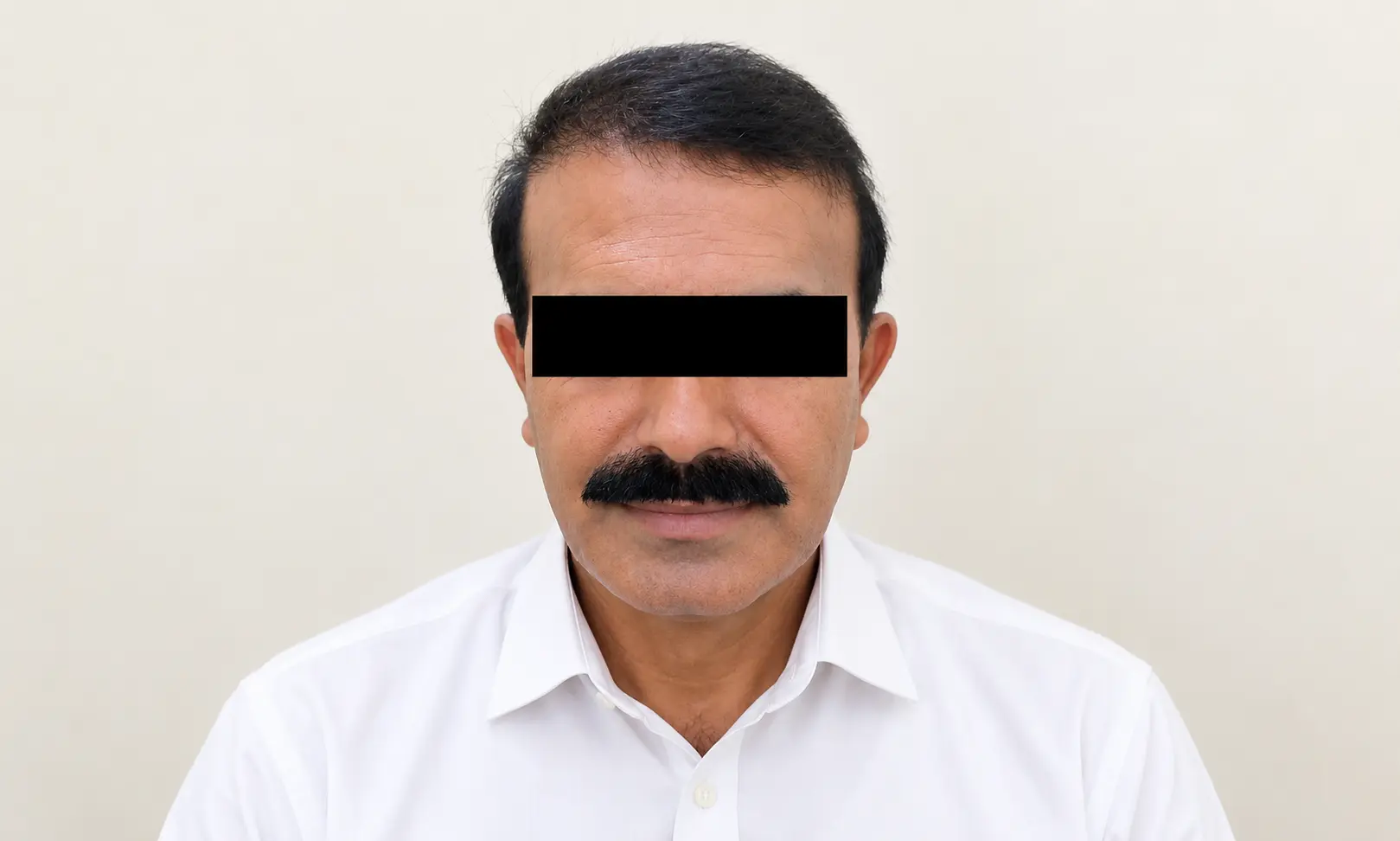
male pattern hair loss treatment in Skinology Multan

Compare Options

Medical Treatment, PRP or a Transplant?

Factor Medical Treatment PRP / PRGF Transplant
Main role Slow loss, maintain/improve hair Possible adjunct Redistribute donor follicles
Surgery No No Yes
Early thinning Often suitable Selected cases Not always needed
Extensive bald areas Limited effect Generally no Depends on donor supply
Ongoing care Usually May need repeats Native hair may still need care
Results Variable Variable, less standardized evidence Variable, depends on planning & donor

Medical Treatment

Main role Slow loss, maintain/improve hair
Surgery No
Early thinning Often suitable
Extensive bald areas Limited effect
Ongoing care Usually
Results Variable

PRP / PRGF

Main role Possible adjunct
Surgery No
Early thinning Selected cases
Extensive bald areas Generally no
Ongoing care May need repeats
Results Variable, less standardized evidence

Hair Transplant

Main role Redistribute donor follicles
Surgery Yes
Early thinning Not always needed
Extensive bald areas Depends on donor supply
Ongoing care Native hair may still need care
Results Variable, depends on planning & donor

Why us

Why Choose Skinology for Hair Loss Care in Multan?

Skinology Laser & Aesthetics emphasizes clinical evaluation, differentiation from other alopecias, individualized treatment planning, long-term progression and donor preservation, and discussion of risks, limits and follow-up. Recommendations depend on assessment and services available.

Book a Hair Loss Consultation at Skinology Multan

You notice a receding hairline. Your crown feels thinner. Your density drops. A consultation clarifies your diagnosis and your options.

FAQs

Answers to Your Most Common Questions

Need Personalized Advice?

Our specialists are ready to answer your questions and guide you.

Can Male Pattern Hair Loss Be Reversed?

It is generally chronic and progressive. Treatment may stabilize thinning and improve density when miniaturized follicles remain viable, but cannot reliably restore all lost hair. Early diagnosis may help preserve existing hair.

Progression may be slow or rapid and can affect the front, crown or both. Observation or accepting hair loss is also a reasonable choice. Consultation should support informed decisions, not pressure patients into procedures.

Evidence does not show PRP as consistently better. They work differently.

Stress can cause other forms of shedding, including telogen effluvium, which may coexist.

After your diagnosis donor evaluation realistic expectations and long-term planning.

VISIT Skinology

Aziz Bhatti Road, Saddar Multan Cantt