

Round bald spots, smooth skin or broken hairs may be early signs. Patches can grow or affect the beard, eyebrows or eyelashes.
Home / Conditions / Hair Loss / Patchy
Have you noticed a round bald patch on your scalp, beard or eyebrows? Patchy hair loss can appear suddenly or develop gradually. Alopecia areata is one possible cause, but fungal infections, traction, hair-pulling disorders and scarring conditions can look similar.
At Skinology Laser & Aesthetics, assessment focuses on identifying the cause before recommending treatment—not automatically suggesting PRP or hair transplantation.
What It Is
Patchy hair loss means hair is missing from one or more localized areas of the scalp, beard, eyebrows, eyelashes or body.
A patch may look smooth, scaly, inflamed or irregular, and it may contain short broken hairs. It describes a pattern of hair loss rather than one specific diagnosis.
Signs And symptoms
Patchy hair loss can develop for several reasons. Understanding its early signs, possible causes and warning symptoms can help you know when to seek medical advice.
01
Round bald spots, smooth skin or broken hairs may be early signs. Patches can grow or affect the beard, eyebrows or eyelashes.
02
See a clinician for unexplained bald patches, especially if they spread, scaling or redness. Early diagnosis may help prevent permanent hair loss.
03
No. Alopecia areata is one possible cause, but other scalp conditions can look similar. The right diagnosis helps guide treatment.
04
Fungal infections, tight hairstyles, repeated hair pulling and scarring conditions can cause patchy hair loss.
Possible causes
✓
Alopecia areata is an immune-related condition that causes smooth, round or oval bald patches. It is not contagious, and hair may regrow because the follicles usually remain intact.
✓
Tinea capitis is a fungal scalp infection that can cause itching, scaling and broken hairs. It can spread through close contact or shared combs, and usually needs oral antifungal treatment.
✓
Traction alopecia develops when tight hairstyles, braids, extensions repeatedly pull on the hair. Early hair loss may improve but prolonged pulling can cause permanent follicle damage.
✓
Trichotillomania involves repeated hair pulling, which can leave irregular bald patches with hairs of different lengths. Supportive care and can help manage hair damage.
✓
Scarring alopecia includes inflammatory conditions such as lichen planopilaris and discoid lupus. These disorders can permanently damage hair follicles, better early assessment.
✓
Other causes of localized hair loss include pressure-related alopecia, congenital conditions or inflammatory disorders. A clinical assessment can guide appropriate treatment.
See The Differences
Pictures can help you recognise patterns, but similar-looking conditions need different treatment. These are image-placement notes for approved clinical photography or medically reviewed illustrations.
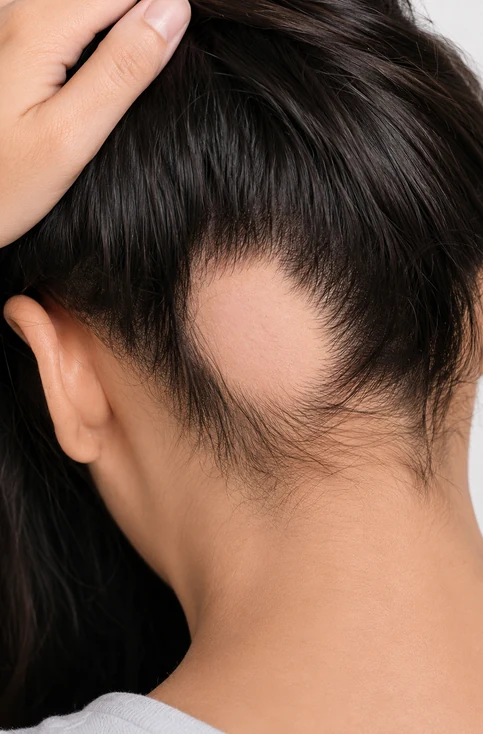
Medically reviewed close-up of a smooth alopecia areata patch.
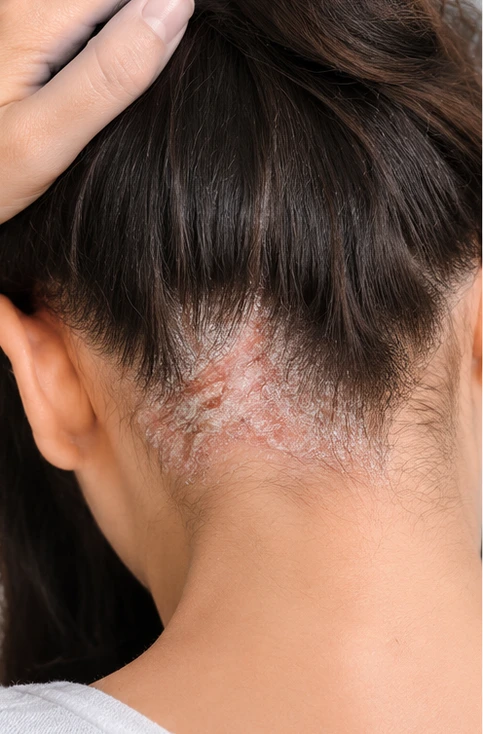
Licensed clinical image of a scaly patch with broken hairs.
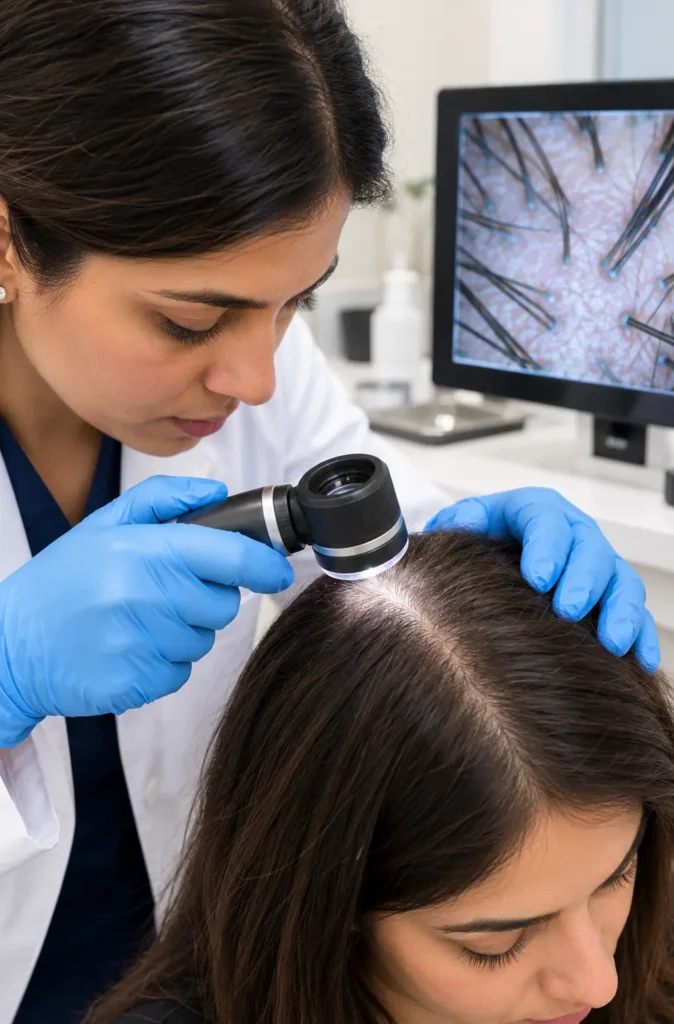
Dermatologist examining the scalp and follicles with magnification.
Treatment approach
Treatment depends on the underlying diagnosis. These options are not interchangeable, and no treatment can guarantee regrowth in every case.
A clinician may consider corticosteroid injections for selected adults with limited patches. Topical treatments or observation with follow-up may suit some patients, including children. Injections can cause skin thinning or pigment changes.
Specialist-directed options may include topical treatment, contact immunotherapy where available, selected systemic medicines or JAK inhibitors for eligible patients. These require careful assessment, safety checks and monitoring.
Tinea capitis usually requires oral antifungal medicine. Antifungal shampoo alone is not enough to clear the infection, though it may help reduce spread.
Stop hairstyles that pull on the roots and manage inflammation if present. Regrowth depends on how long traction continued and whether follicles have been damaged.
Habit-reversal training and other behavioural interventions may be helpful alongside supportive dermatological care.
Prompt, targeted anti-inflammatory or immunomodulatory treatment may help prevent further follicle damage. Hair generally does not regrow from follicles that have been destroyed by scarring.
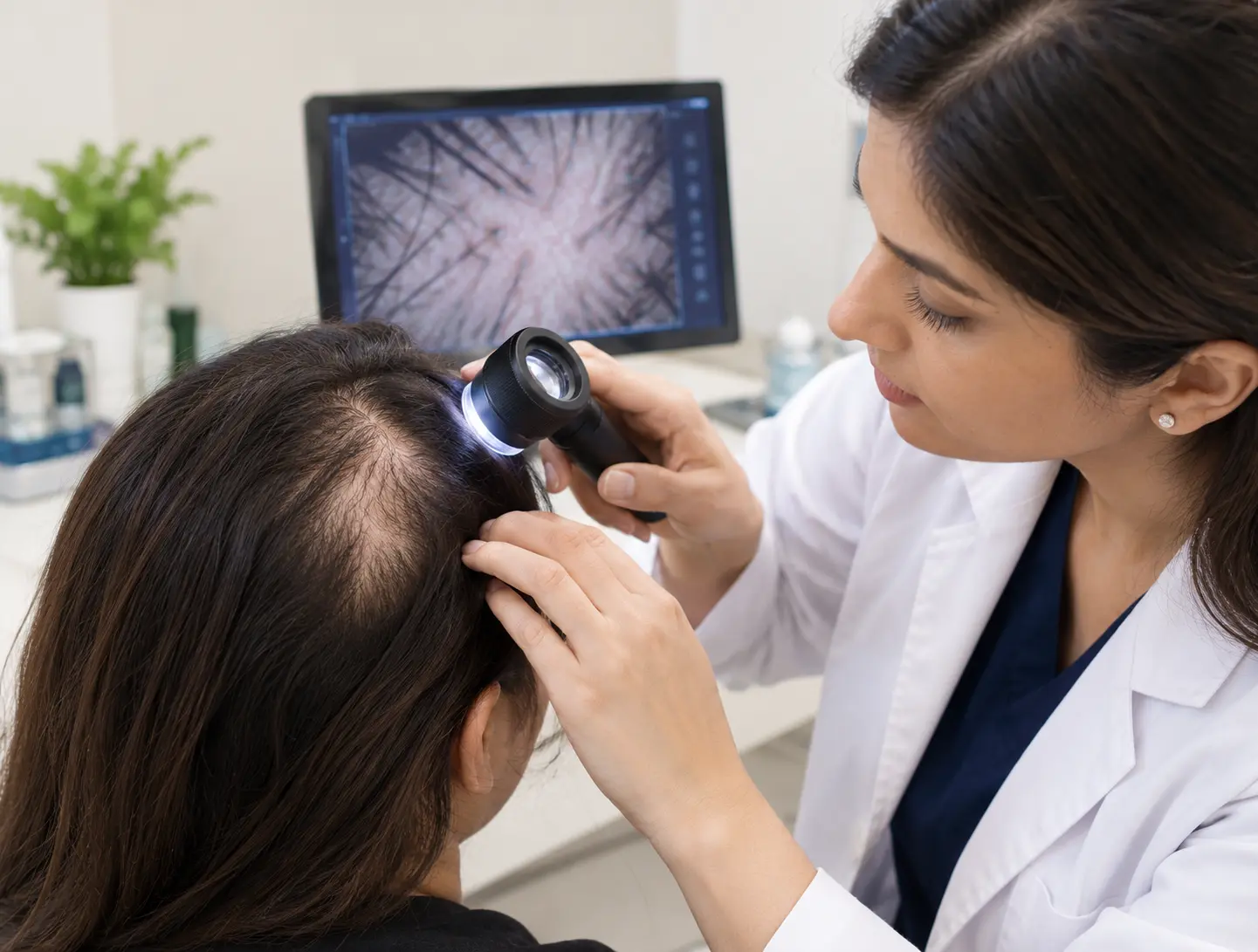
What About PRP or Hair Transplantation? PRP is not a first-line treatment for alopecia areata. Hair transplants are unsuitable for active disease or unexplained bald patches. Hair Restoration · PRP Treatment · Hair Transplant
Recovery And Prognosis
Sometimes. Some alopecia areata patches regrow spontaneously, although recurrence can occur and the course is difficult to predict. Hair loss from a fungal infection may recover with timely treatment unless scarring develops. Established scarring alopecia generally does not regrow hair in affected areas.
Not always. The outlook depends on the cause and whether follicles remain intact. Assessment helps distinguish potentially reversible loss from scarring.
Alopecia areata and traction alopecia are not contagious. Tinea capitis can spread through close contact or shared combs, brushes and headwear.
Stress may coincide with the onset or recurrence of alopecia areata, but it is an immune-mediated condition and should not be attributed to stress alone.
Compare Common Causes
Swipe left or right to compare all conditions →
| Feature | Alopecia Areata | Tinea Capitis | Traction Alopecia | Scarring Alopecia |
|---|---|---|---|---|
| Appearance | Smooth patches | Scale and broken hairs | Areas under repeated tension | Inflammation, follicular openings may disappear |
| Contagious | No | Can be | No | Usually no |
| Main Approach | Immune-directed care | Oral antifungal treatment | Remove tension | Suppress inflammation |
| Regrowth | Variable | Often possible with timely care | Possible in early cases | Limited after scarring |
Book an assessment for a new unexplained patch, particularly if it is enlarging, painful, inflamed or scaly. Explore Hair Loss & Scalp Problems · Medical hair treatment options
A new bald patch deserves an accurate diagnosis. Speak with Skinology Laser & Aesthetics in Multan about assessment and suitable next steps.
FAQs
Our specialists are ready to answer your questions and guide you.
Alopecia areata is one common cause, but fungal infection and inflammatory conditions can look similar. An examination helps identify the cause.
No. Alopecia areata is immune-mediated and is not contagious. Some fungal scalp infections, however, can spread between people.
Yes. Alopecia areata can affect beard hair, eyebrows and eyelashes, but infection and other conditions can cause similar changes.
Scaling, itching, broken hairs and black dots may suggest tinea capitis. Testing may be needed, and treatment usually requires oral antifungal medicine.
Hair transplantation is generally not recommended during active alopecia areata or before the cause of a bald patch is known.
Yes. Causes include alopecia areata, fungal infection, traction and hair-pulling disorders. Treatment should be appropriate for the child’s age and diagnosis.
Cost depends on the diagnosis, any required investigations and the treatment selected after assessment. Contact the Skinology skin & hair clinic for current fees.
VISIT Skinology
Clinic
Treatments & Conditions
Contact Info
Address
Aziz Bhatti Rd, Saddar Multan Cantt, 64000
Phone
(+92) 312-4199100
Email
info@skinology.pk
Hours
Mon – Sat: 02:00 PM – 08:00 PM
Your trusted partner in achieving healthy, beautiful skin. Dr. Rizwana Hanif combines expertise with compassion to deliver exceptional dermatological care in Multan.
Copyright © 2026 Skinology Multan. All Rights Reserved.