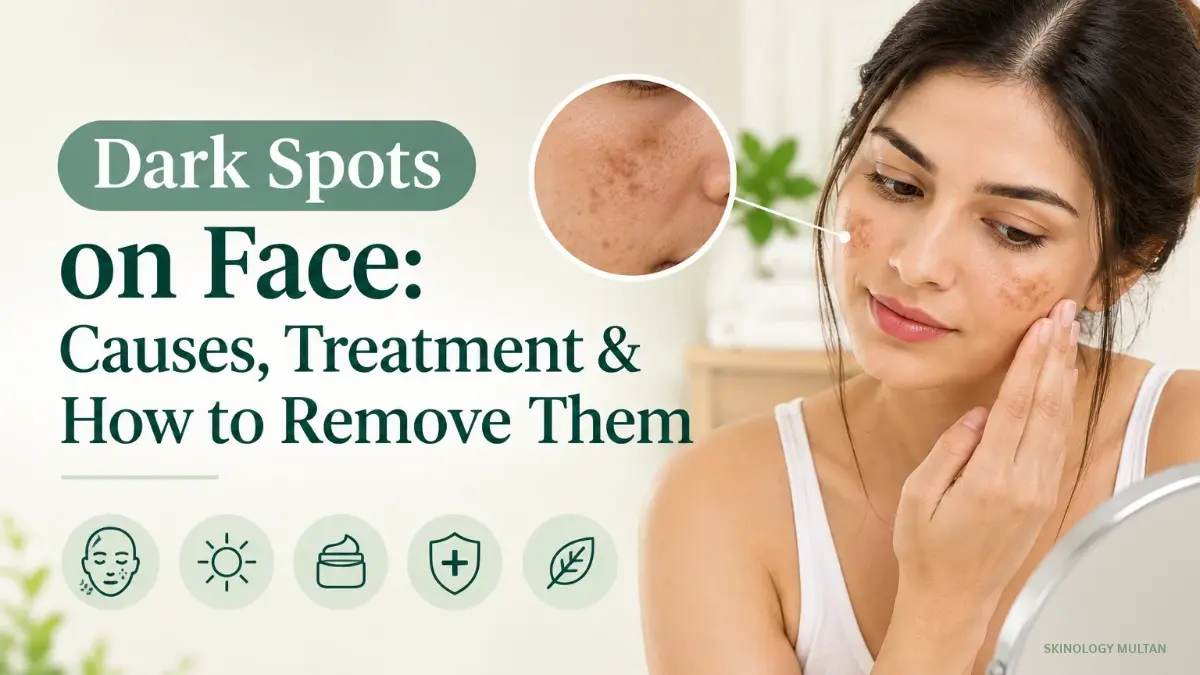
Dark spots on the face are patches of skin that are darker than the skin around them, caused by your skin producing extra melanin in response to acne, sun exposure, hormones, or injury. Most fade with consistent treatment over several months — but which treatment works depends entirely on what’s actually causing your spots.
What's causing your dark spots?
Not every dark spot is the same condition, and treating the wrong one the wrong way can make things worse. The three most common causes:
Post-inflammatory hyperpigmentation (PIH): the dark mark left behind after a pimple, cut, or burn heals. This is almost always what people mean by “acne dark spots,” and it’s the single biggest reason people search for dark spot treatment.
Sun spots (solar lentigines): small, flat, well-defined brown spots caused by years of cumulative UV exposure. Also called age spots, though age itself isn’t the cause — sun exposure adding up over time is.
Melasma: bigger, irregularly shaped, symmetrical patches related to hormones (pregnancy, birth control pills, thyroid problems), plus ultraviolet light exposure. Melasma is more frequent in females and people with intermediate or darker skin colors.
Dark spots vs. melasma vs. sun spots vs. acne marks
How to remove dark spots on face — a real routine, not just a list
The reason most creams for dark spots do not work is not because the active ingredient is ineffective; rather, it is because of incorrect application. A basic skincare regimen would include the following steps:
Morning: gentle cleanser → vitamin C serum → moisturizer → sunscreen SPF 30+ (non-negotiable — without daily sunscreen, every other step is working against new sun-triggered pigment at the same time it’s trying to fade old pigment)
Night: gentle cleanser → treatment ingredient (see table below — pick one, not several at once) → moisturizer
Results take time regardless of the ingredient: expect visible fading in 6–12 weeks with consistent use, not days.
Ingredient comparison
How to remove dark spots caused by pimples
Unlike sun spots, acne marks heal quicker and more predictably due to the pigment lying closer to the surface, which is great. Order of operations:
1. First, address the acne problem. Active acne will cause more spots to appear more quickly than current spots can heal — the problem has to be solved first, not second.
2. Avoid picking. If you pick a pimple, you are making your inflammation worse, and what should’ve healed in weeks becomes months due to this inflammation.
3. Azelaic acid or niacinamide tend to be more tolerable for acne-prone skin than retinoids since retinoids can be irritating to already inflamed skin.
4. Wear sunscreen every day, because UV rays darken the healing spots, undoing all your efforts in one unprotected day.
How to remove dark spots fast — what's actually realistic
There’s no product that clears dark spots overnight, regardless of what packaging claims. Realistic timelines:
- PIH from new breakouts: Improvement visible between 4 to 8 weeks of consistent daily treatment.
- Sunspots: Between 3 to 6 months of focused treatment, although clinical treatment processes will significantly reduce time.
- Melasma: Months to years of disciplined treatment depending on how diligent you are even after removal of pigmentation.
The closest thing to “fast” that actually works is an in-clinic chemical peel or laser session (below) — not a home remedy or over-the-counter cream.
Home remedies: what actually helps (and the one thing to avoid)
Some of the common ingredients in DIY recipes include turmeric, besan, and lemon juice. However, it is important to note that turmeric and besan are mostly exfoliators – they do not remove the skin pigment the same way niacinamide and azelaic acid do; they just make your skin glow.
When using lemon juice in your DIY treatments, one should exercise extreme caution since its acidic nature can be irritating for the skin and, when combined with sunlight exposure, can even result in more pigmentation.
A word of warning: There are a few imported fairness creams available in the markets, which are not labeled properly and contain either steroid or mercury, which may be absent from the label. Over a period of time, the steroid and mercury can thin out your skin, cause rashes or even leave permanent discolorations.
In-clinic treatments for faster, longer-lasting results
When home routines plateau, in-clinic options work faster and reach pigment that topical products can’t:
- Chemical peels — exfoliate the outer skin layers to reveal less pigmented skin underneath
- Laser therapy / IPL — targets pigment directly, effective on stubborn sun spots and some acne marks
- Microneedling — often combined with brightening serums for acne-related marks
For melasma specifically, aggressive treatments like some lasers can backfire and worsen pigmentation if not handled carefully — this is why melasma in particular is better managed by a dermatologist than through trial and error at home. Skinology offers consultations to identify exactly which type of pigmentation you’re dealing with before recommending a treatment plan.
Not sure what's causing your spots?
If you’ve been treating dark spots for months without results, it may be the wrong treatment for the type of pigmentation you actually have. Skinology’s dermatologists can identify the cause and build a treatment plan suited to your skin.